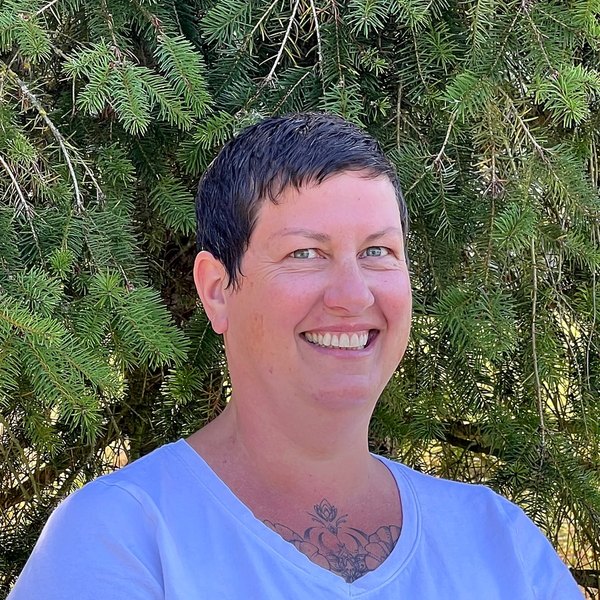
Hi, I’m Stephanie.
I built The Grounded Expat because I know what it’s like to build a life somewhere else, and how different that life can feel on the inside.
Before we left, my husband and I sold six acres and every animal on it. Six weeks of handing our life to strangers.
The thing that got me worst was the stand mixer. Which sounds ridiculous, except that buying it was the first time I’d felt like a proper adult, and I watched it go into somebody else’s car.
We’ve been moving ever since. Southeast Asia, South America, and a lot of places in between. I still don’t have an address.
I’ve worked in human services since 2009, and I assumed that would make all of this easier. It didn’t, particularly. Knowing exactly how adjustment works did not stop me standing in a grocery store on an ordinary afternoon, unable to find one simple thing, much closer to tears than the situation called for.
What the training gave me was language for it. And what I keep finding is that language is most of what people are missing.
Why I built The Grounded Expat.
I’ve spent a lot of my career working with shame and self-criticism. I didn’t set out to build anything around that. But almost everyone who writes to me arrives at the same sentence eventually:
I chose this. It looks wonderful from the outside. So what is wrong with me for finding it hard?
That question keeps people quiet. You chose the move, so you think you don’t get to say that you’re lonely, angry, homesick, or unsure. You keep giving everyone the good answer, and the part you don’t say gets heavier.
Most of what I make begins there: naming the thing accurately, without telling you to be more grateful or more positive about it.
The experience behind the work.
Credentials
- Licensed Independent Clinical Social Worker (LICSW)
- Master of Social Work, University of Southern California
- Bachelor of Social Work, Brescia University
- In human services since 2009
What I tend to work with
My background is clinical, and I’m also polyvagal-informed and a trained Hatha yoga teacher, so the body-based side of this is something I practice rather than only talk about.
My approach is person-centered, which at bottom means I think people already have what they need, and mostly need conditions where it can surface. So a lot of the work is naming things accurately and then getting out of the way.
That’s true of the journals too. They ask questions. They don’t tell you what you found.
What this is, and what it isn’t.
The Grounded Expat is educational. The journals, workbooks, kits and The Circle are self-guided resources. They are not therapy, treatment or diagnosis, and using them doesn’t make us clinician and client.
That isn’t only a technicality. Licensure doesn’t cross borders, which is one of the quieter problems of living abroad: the people best placed to help you are often legally unable to. Building things you can work through on your own is my answer to that.
If you are in crisis, please contact local emergency services or a crisis line where you are.
Elsewhere.
I write an essay most weeks on Substack, and there are twenty articles here on the site.
If you want to reach me, [email protected] comes straight to me.